EN


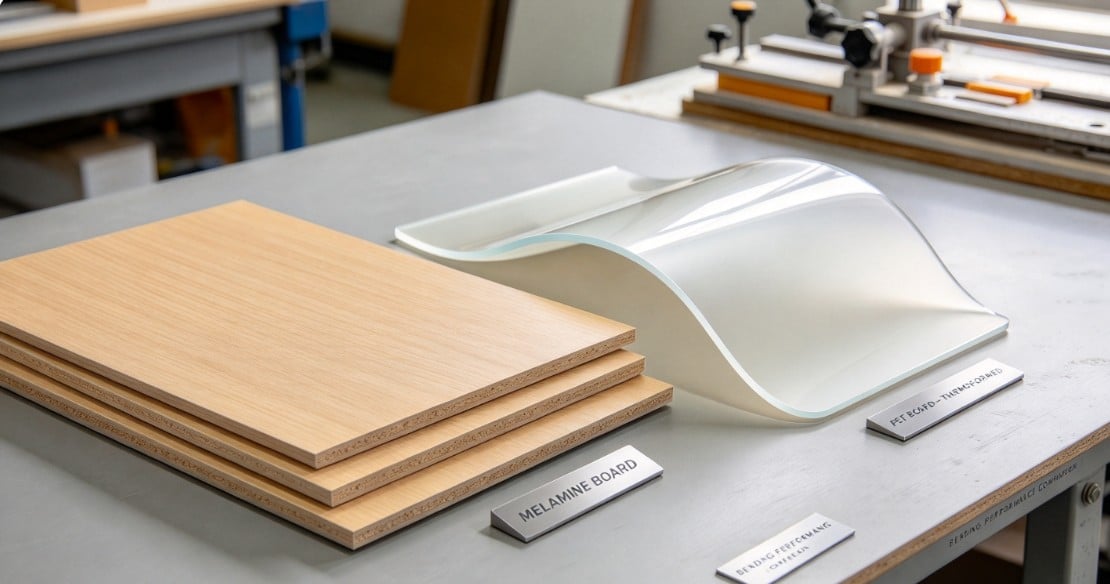
Curved door panels, arched cabinetry and custom‑shaped wall panels are popular design elements within the global custom furniture and hospitality interior sectors. Manufacturers frequently ask whether melamine‑faced panels or PET‑faced panels are suitable for thermo‑bending or wrapping, and what common pitfalls to avoid during production. While both types of panels typically share the same substrate, their surface materials possess vastly different properties. This creates major differences in thermo‑bending tolerance and final forming quality. Selecting the wrong material may result in surface cracking, edge chipping or wrinkling, and even full‑batch production rejection.
Underlying Principles Of Heat Bending For Two Types Of Sheet Materials
Melamine boards feature a surface layer of melamine‑impregnated paper cured under high temperature and high pressure. Once cured, this melamine layer becomes highly rigid with very poor ductility. Standard melamine‑faced boards are not suitable for thermal bending with a large curvature; they are only appropriate for gentle, rounded corners or edge‑banding profiles with a large radius. Attempting to force a bend at high temperatures will likely cause the decorative surface layer to fracture, exposing the substrate. While a few specially modified melamine products available on the market can accommodate slight bending, they offer limited design options, require longer lead times, and come at a higher cost.
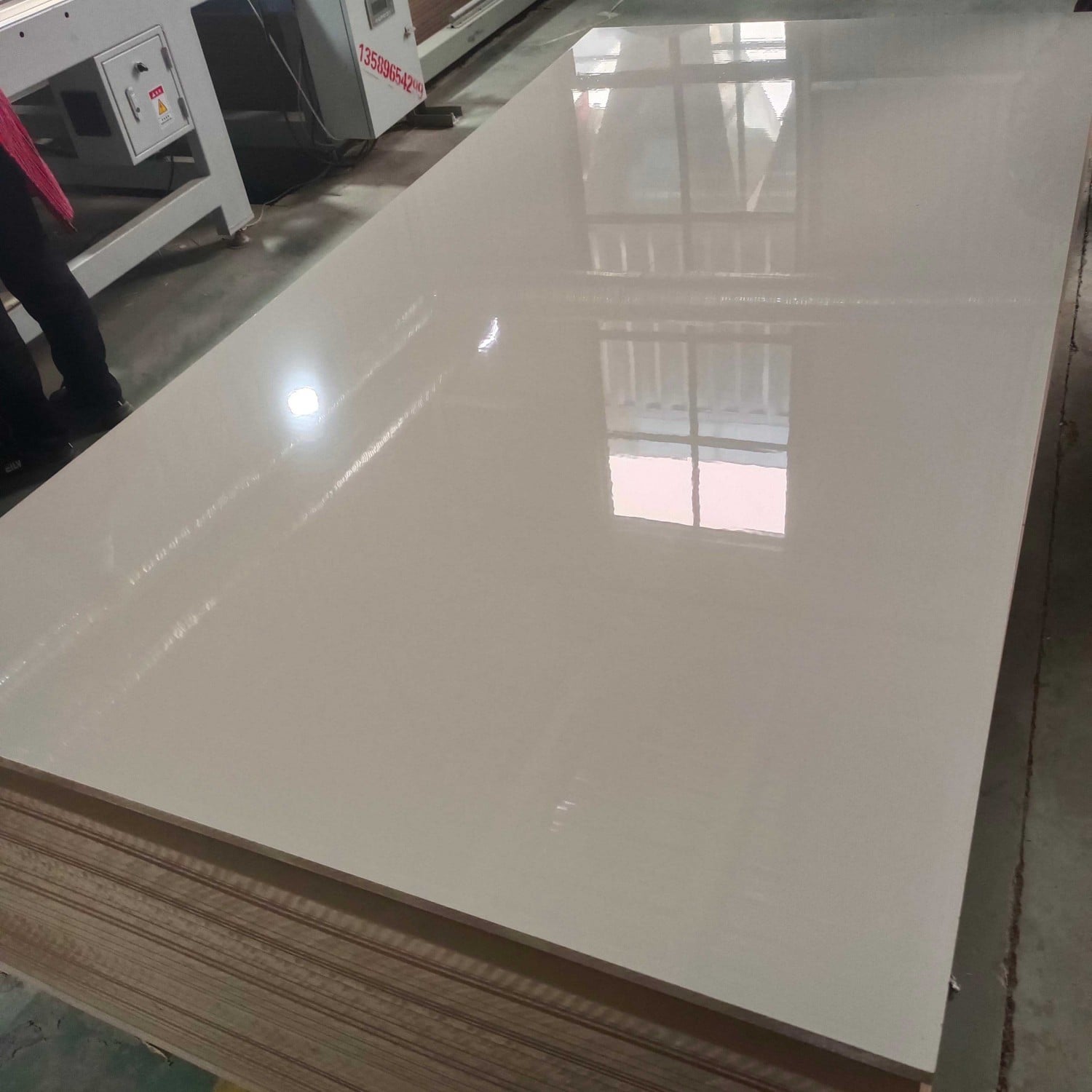
The surface of a PET decorative panel consists of a polymer PET film, which possesses inherent flexibility and excellent thermal ductility within an optimal temperature range. This makes it the preferred choice for curved door panels and rounded cabinetry. Through controlled heating, the PET film can stretch and deform in tandem with the substrate; once cooled, it sets firmly into shape. The resulting surface is resistant to cracking, with smooth, natural transitions along the curves. However, the thermo‑bending of PET has its limitations: if the radius of curvature is too small or the temperature is not precisely controlled, issues such as surface whitening, visible stretching marks, or localized bubbling may occur.
Key Processing Parameters And Common Defects
1. Processing Temperature: Thermobending PET sheets requires precise temperature control. If the temperature is too low, the film lacks sufficient ductility and is prone to cracking; if it is too high, the PET film may oversoften, lose its gloss, or develop an "orange peel" texture.
2. Curvature Limitations: Every sheet thickness has a minimum bending radius. Tighter curvatures increase processing complexity and scrap risk.
3. Summary Of Common Issues
Recommendations For Procurement And Selection Of Processing Facilities
| Aspect | Melamine Boards | PET Boards |
| Bending radius | Large‑radius / gentle curves only; not suited to tight thermo‑bending | Supports tighter curves via thermo‑bending (within minimum bending radius) |
| Surface risk | High risk of cracking, blistering/delamination or grain splitting when bent | Lower cracking risk; watch for stretch marks, uneven gloss or bubbling |
| Cost | Cost‑effective; wide pattern range, shorter lead times | Higher cost; more limited options |
| Best application | Straight‑line cabinetry, standard door panels, square wall panels | Curved door panels, rounded wall cladding, custom‑shaped wrapped components |
Summary
In short: Melamine boards excel in flat‑surfaced furniture but are not well‑suited for bending. PET boards are the preferred choice for curved designs; however, the thermo‑bending process is highly sensitive and requires specialized equipment and operator expertise. Selecting the right material based on the furniture’s design beforehand can significantly reduce the rate of production waste and ensure the smooth fulfillment of overseas orders.
 Hot News
2026-10-22
2026-10-15
2026-10-12
2026-10-06
Shandong Zhenshijie — China's trusted manufacturer of PET & melamine veneer panels for cabinets, kitchens & furniture. MDF, plywood, particleboard & more — custom sizes, textures & finishes.
located north of Xiaowan Line, Tanyi Town, Feixian County, Linyi City, Shandong Province.
Copyright © 2026 Shandong Zhenshijie International Trade CO,. LTD All rights reserved. Privacy Policy